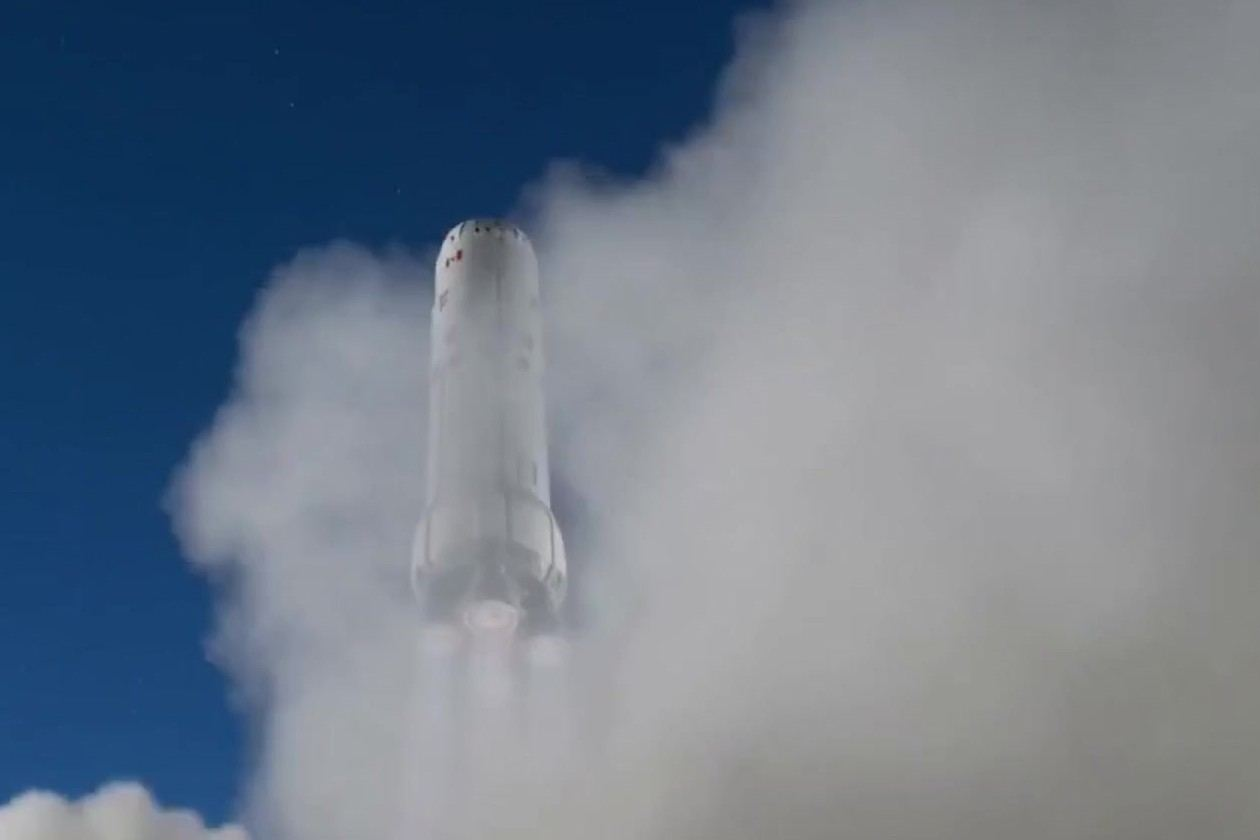
The ship that drinks from comets.
The idea
The Kettle is a water-propellant nuclear thermal launch vehicle. A nuclear reactor heats water into superheated steam and pushes it out a nozzle. No combustion, no soot, no chlorine, no alumina – and a propellant you can find almost anywhere humans want to go.
The physics is not speculative. Nuclear thermal propulsion was ground-tested in the 1960s: the NERVA/Rover program’s Phoebus 2A reactor ran at 4,100 megawatts – for years the most powerful reactor ever built – and NASA’s own recent assessments confirm water as a viable NTP propellant. The Kettle adapts proven reactor heritage to the one propellant the solar system hands out for free.
Why water
- The atmosphere. Chemical launch puts black carbon and alumina where nothing else operates – the stratosphere – at a scale peer-reviewed science now calls an unregulated geoengineering experiment. Steam doesn’t. (We put our own exhaust on trial too: see Hearing #4 – The Plume.)
- The monopoly. Whoever builds the first off-world propellant refinery owns the road to everywhere – a tollbooth at the top of the gravity well. Water is everywhere: comets, asteroids, the Moon’s poles, Europa. A rocket that runs on water means nobody owns the road. Everyone brings their own kettle.
- The refuel. A propellant you can mine with a drill and a heater turns deep space from a one-tank problem into a network of wells.
Watch the film
The Ship That Drinks From Comets is a three-minute film about who pays the atmospheric cost of leaving Earth. It was entered in the Future Vision XPRIZE and was not among the fifty selections. We published it anyway, with the result named and the weak points listed.
Read the case
- The Bomb and the Kettle – chemical failure modes vs. nuclear heritage, and why “nuclear” is the everyday technology here.
- Kettles for the Commons – the refinery-monopoly argument in full.
- No Significant Impact – 146 approved launches a year, and the finding that waved them through.
- The Plume We Don’t Talk About – the honest comparison of exhausts, including ours.
Where it stands
The Kettle is at concept stage – architecture defined, propulsion baselined against published NERVA-era test data and current NASA technical assessments, with the feasibility modelling (the graduated water-to-hydrogen-enriched launch profile) as the first funded engineering question. The claim it rests on is filed where anyone can attack it: in the Hearings.
Inter Species Wisdom Project Inc. – A British Columbia Benefit Company – “Now that you know, what will you do?”